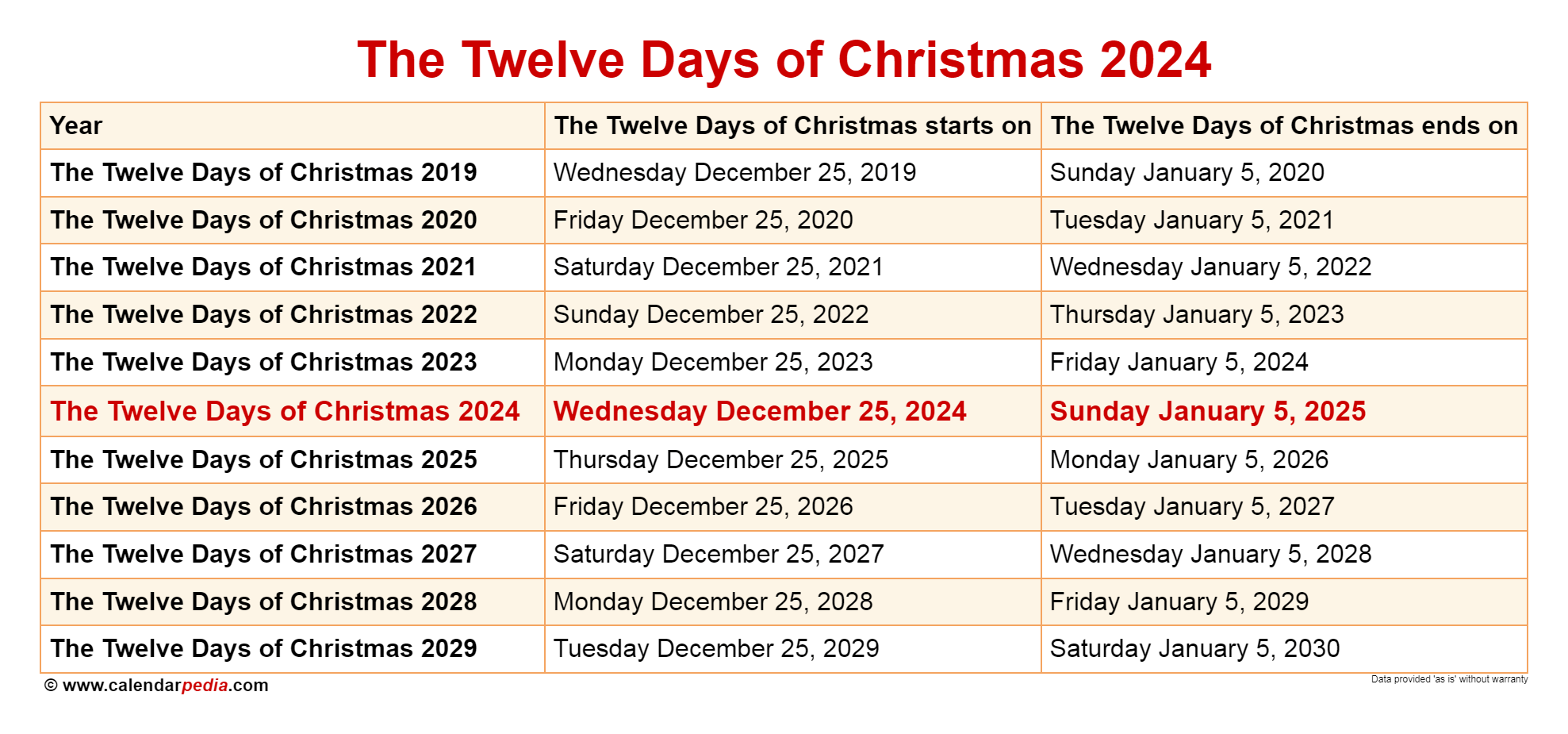
The designation “c christmas eve 2025 dates” refers to the precise chronological placement and multifaceted cultural significance of the eve preceding Christmas Day in the year 2025. This specific calendrical observance, universally recognized as December 24th, represents a pivotal moment in the annual cycle for billions globally, serving as a prelude to one of the most widely celebrated holidays. Understanding the mechanisms by which this date is established, its historical evolution, and its profound societal implications provides comprehensive insight into its enduring importance.
The establishment of the date for the eve of Christmas, specifically December 24th, is rooted deeply in historical ecclesiastical decisions and calendrical conventions. The primary calendar system governing the vast majority of global activities, including religious observances, is the Gregorian calendar. Instituted by Pope Gregory XIII in 1582, this solar calendar refined the earlier Julian calendar, correcting its accumulated inaccuracies regarding the true length of the solar year. The Gregorian calendar designates December 25th as Christmas Day, a fixed date commemorating the birth of Jesus Christ. Consequently, the preceding day, December 24th, is inherently established as the eve of this significant celebration. The consistency of this fixed date across centuries underscores a deliberate historical choice to anchor the holiday within a specific point in the solar year, thereby making the determination of the December 24th observance for any given year, including 2025, a straightforward calendrical calculation.
Historically, the precise dating of the Nativity itself was not immediately uniform among early Christian communities. Various dates were observed, including January 6th (Epiphany), March 25th, and April 19th. The adoption of December 25th as the universally recognized date for Christmas Day emerged predominantly in the Western Roman Empire by the 4th century CE. This choice is often linked to the Roman festival of Dies Natalis Solis Invicti (Birthday of the Unconquered Sun), a pagan celebration of the winter solstice. By aligning the Christian feast with an existing popular festival, early Church leaders facilitated the transition and adoption of Christianity among pagan populations. This historical syncretism cemented December 25th, and by extension, the December 24th observance, as the established date within the Christian liturgical calendar. For 2025, this historical precedent remains the foundational element for its chronological placement.
The significance of the December 24th observance extends far beyond its religious origins, permeating cultural, social, and economic spheres worldwide. Culturally, it marks the commencement of intense festive activities. Traditions vary widely across different regions and families but often include special meals, gift exchanges, carol singing, and attending midnight services. The atmosphere on this specific evening is frequently characterized by anticipation, joy, and a sense of communal gathering. For many, it is a time for family reunions, reflecting on the year past, and preparing for the culmination of the holiday season. The widespread adherence to these traditions underscores the deep-seated cultural importance of this particular date in the annual calendar.
Socially, the December 24th event acts as a powerful catalyst for community engagement and philanthropic endeavors. Many organizations utilize this period for charitable drives, food distribution, and support for vulnerable populations. The spirit of giving and goodwill often reaches its peak during this time, fostering a sense of collective responsibility and empathy. Schools, workplaces, and various institutions often adjust schedules to accommodate the widespread celebrations, highlighting the societal recognition of this evening as a unique temporal marker. The communal anticipation built around the eve of the holiday creates a shared experience that transcends individual beliefs, fostering a collective sense of belonging and festivity.
Economically, the period leading up to and including the December 24th observance is one of the most crucial for retail and service industries globally. Businesses anticipate and prepare for heightened consumer activity, driven by gift-buying, holiday meal preparations, and travel. The economic impact is substantial, influencing employment rates, supply chains, and market trends. Logistics and transportation networks experience immense pressure as goods are shipped and people travel to be with loved ones. The predictability of the December 24th date allows for extensive pre-planning across all sectors, enabling businesses to optimize operations and consumers to organize their holiday preparations effectively. The fixed nature of the date in question provides a stable anchor for annual economic forecasting and strategic planning.
The predictability of the December 24th observance for 2025, as with all years, offers considerable benefits for planning and coordination. Individuals and organizations can schedule events, travel arrangements, and family gatherings well in advance, minimizing last-minute complications. This foresight is particularly crucial for international travel, where flights and accommodations require early booking. For businesses, the fixed date allows for meticulous inventory management, staffing adjustments, and marketing campaigns tailored to the holiday rush. Public services, including emergency services and transportation, can also anticipate increased demand and allocate resources accordingly. The unwavering consistency of this annual demarcation facilitates seamless execution of complex logistical operations on a global scale.
Furthermore, the observance of the eve of the Nativity in 2025 serves as a significant marker in the annual cycle of reflection and renewal. For many, it is a time to pause, consider personal achievements and challenges of the past year, and look forward to the possibilities of the new year. This introspective quality, coupled with the outward expressions of joy and generosity, contributes to the holistic significance of the date. The shared experience of preparing for a major holiday creates a collective rhythm, providing a sense of continuity and tradition that binds communities and generations. The fixed nature of the December 24th event allows for the perpetuation of these important annual rituals.
In summary, the specific calendrical determination of the eve of Christmas in 2025 as December 24th is a direct consequence of the Gregorian calendar’s structure and centuries of historical and ecclesiastical consensus. Its importance is multifaceted, encompassing deep cultural traditions, significant social interactions, and substantial economic implications. The fixed nature of this date provides invaluable predictability, enabling comprehensive planning and coordination across various sectors. The December 24th observance stands as a testament to the enduring power of shared traditions and the profound impact of a single date on global human activity.
FAQs by c christmas eve 2025 dates
Q1: What is the precise date for the eve of Christmas in 2025?
A1: The precise date for the eve of Christmas in 2025 is December 24th. This date is consistently observed annually according to the Gregorian calendar.
Q2: How is the date for the eve of Christmas determined each year?
A2: The date for the eve of Christmas is determined by its fixed position relative to Christmas Day, which is December 25th. As December 25th is a static date within the Gregorian calendar, the preceding day, December 24th, is automatically designated as the eve.
Q3: Does the date of the eve of Christmas change based on different calendar systems?
A3: While the Gregorian calendar universally observes December 24th, some Eastern Orthodox Churches utilize the Julian calendar for their liturgical year. For these churches, December 25th on the Julian calendar falls on January 7th of the Gregorian calendar, meaning their eve of Christmas would be January 6th Gregorian. However, for the vast majority of global observance, December 24th remains consistent.
Q4: What is the primary cultural significance of the December 24th observance?
A4: The primary cultural significance of the December 24th observance lies in its role as the traditional start of Christmas festivities. It is a time for family gatherings, special meals, gift preparations, and often attending religious services, marking a period of heightened anticipation and celebration.
Tips by c christmas eve 2025 dates
- Plan Travel Early: Given the fixed nature of the December 24th observance, securing travel arrangements well in advance is advisable to mitigate higher costs and limited availability.
- Coordinate Family Gatherings: Utilize the predictability of this annual demarcation to establish family gathering schedules and logistics with ample lead time, ensuring maximum participation and enjoyment.
- Complete Holiday Shopping Progressively: To avoid last-minute rushes and potential stock shortages, it is beneficial to commence holiday shopping incrementally over several weeks leading up to the December 24th event.
- Confirm Business Hours: Be aware that many businesses and services may operate on reduced hours or close entirely on the eve of the holiday; verifying operational times in advance is recommended.
Conclusion by c christmas eve 2025 dates
The analysis of “c christmas eve 2025 dates” reveals a concept firmly anchored in calendrical precision and profound cultural resonance. The consistent placement of this specific calendrical observance on December 24th, dictated by the Gregorian calendar and centuries of tradition, provides a stable and predictable temporal marker. Its importance transcends mere chronological designation, serving as a pivotal point for global cultural celebrations, significant economic activity, and deeply personal reflection. The fixed nature of the December 24th event facilitates comprehensive planning across all sectors, from individual family preparations to international logistical operations. Understanding the historical roots and contemporary implications of this date underscores its enduring significance as a universally recognized prelude to one of humanity’s most cherished annual holidays.